

Does UV Light Kill Bed Bugs? What the Science Says
Not reliably. Strong UV-C light can kill bed bug eggs and young nymphs that it hits directly. In a 2013 Ohio State lab study, 5–10 seconds of UV-C from 4 cm away killed 95–100% of exposed eggs. But UV can't reach bugs hiding in seams, cracks and cushions, and blacklight flashlights (UV-A) don't kill bed bugs at all.
If an infested mattress or couch can't be saved, Junk Robbers removes bed bug furniture in Chicago discreetly. We also serve other cities. Free quote.
If you're considering buying a UV flashlight or UV sanitizer to get rid of bed bugs, understanding the difference between laboratory results and real-world treatment could save you money—and prevent an infestation from getting worse.
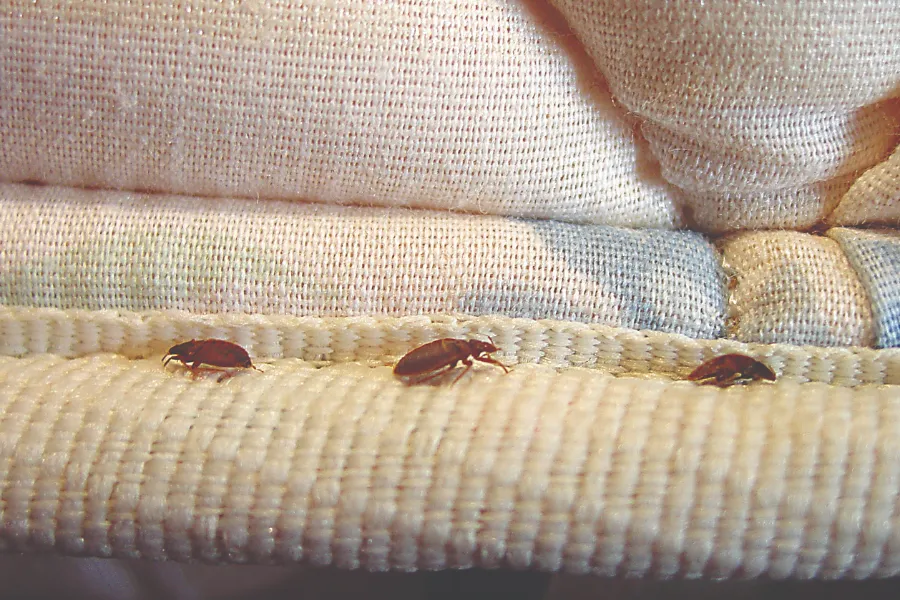

Key takeaways
- Direct UV-C exposure can kill bed bug eggs and young nymphs in lab conditions, but it is not a proven way to clear a whole infestation.
- UV light can’t reliably reach bed bugs hiding in mattress seams, furniture joints or wall cracks.
- Professional integrated pest management is more reliable, and infested items that can’t be treated may need to be removed.
This guide explains what scientific studies actually found, why most household UV lights fall short, which treatment methods are more reliable, and when infested furniture may need to be removed.
Does UV Light Really Kill Bed Bugs?
UV light can affect bed bugs, but the type of UV radiation, exposure time, intensity, and distance all matter.
Ultraviolet-C (UV-C) radiation carries enough energy to damage biological material, including DNA. In a laboratory setting, sufficiently intense direct exposure can harm or kill susceptible bed bugs.
That doesn't mean turning on a UV lamp in a bedroom will kill every bed bug.
For treatment to work, the insects must receive a sufficient dose of UV-C. A bug hidden beneath fabric, behind a headboard, or inside a narrow furniture joint may receive little or no effective exposure.
The key distinction: Killing exposed bed bugs in a controlled experiment is not the same as eliminating a hidden, reproducing population throughout a home.
Professional bed bug control generally relies on integrated pest management, which combines inspection, appropriate treatment, prevention, and follow-up monitoring rather than trusting one device to solve the problem. When infested items cannot be treated, safe bed bug furniture and mattress removal is often the next step.
How Does UV Light Kill Bed Bugs?
Strong UV-C light damages the DNA and cell structures of insects that are directly exposed to it, which can stop them from reproducing or kill them. The catch is exposure. The light has to reach the bug or egg directly, and bed bugs hide in seams, cracks and inside cushions where light can't get in.
If you still want to try a UV-C device as a supporting step:
- Move the lamp slowly along mattress seams, bed frame joints and baseboard cracks.
- Wear UV-protective eyewear, cover your skin and keep people and pets out of the beam.
- Pair it with vacuuming, laundering on high heat and a licensed pest control professional.
For infested pieces that can't be saved, see bed bug furniture removal.
Does UV-C Light Kill Bed Bugs? UV-A vs. UV-C
Not all "UV light" is the same. The type matters more than the brand:
- UV-A (about 315–400 nm): the light from most blacklight flashlights, usually sold at 365 nm or 395 nm. It makes some stains easier to see, but it doesn't kill bed bugs.
- UV-C (about 100–280 nm): germicidal light from sanitizer lamps and wands. This is the type the Ohio State study used, and it killed many directly exposed eggs and some first-stage nymphs at very close range.
So UV-C can kill bed bugs it reaches directly. But no study has shown that a household UV-C lamp clears a real infestation, and the FDA has warned that some UV-C wands can injure skin and eyes within seconds. Treat UV-C as an unproven add-on, never as your only plan.
What Does Scientific Research Say About UV Light and Bed Bugs?
One of the most directly relevant studies is a 2013 undergraduate entomology research thesis by Jaime Iten at The Ohio State University, titled The Impact of Ultraviolet Light on Survival and Behavior of the Human Bed Bug, Cimex lectularius Linnaeus.
The study investigated whether UV-C exposure affected the survival of bed bug eggs and first-stage nymphs—the insects' earliest immature stage.
How the UV-C Experiment Worked
Researchers used a 35-watt UV-C bulb from an Oreck Halo vacuum cleaner, mounted in a specially constructed experimental apparatus.
Bed bug eggs and first-stage nymphs were directly exposed at a distance of approximately 4 centimeters (1.6 inches).
Exposure periods were 1, 2, 5, and 10 seconds. Researchers assessed mortality after 14 days and compared the results with untreated control groups.
These highly controlled conditions matter because a household UV lamp operating farther away, or with a bed bug concealed in fabric, may deliver a very different dose.
UV-C Exposure: Bed Bug Eggs vs. Nymphs
The study reported the following results:
| Direct UV-C Exposure | Egg Mortality | First-Stage Nymph Mortality |
|---|---|---|
| 1 second | 21% | 0% |
| 2 seconds | 35% | 3% |
| 5 seconds | 100% | 24% |
| 10 seconds | 95% | 62% |
Source: Jaime Iten, The Ohio State University (2013), Tables 1 and 2. Percentages represent laboratory treatment groups assessed after 14 days; untreated controls also experienced some mortality.
The difference between life stages is significant.
At five seconds, all treated eggs in that experimental group failed to survive, but most treated first-stage nymphs survived. At ten seconds, egg mortality remained high while nymph mortality increased to 62%.
The study also found that surviving UV-exposed nymphs were less successful at locating a human host during a separate behavioral experiment.
There are several important limitations:
- The research studied eggs and first-stage nymphs, not adult bed bugs.
- Subjects received direct UV-C exposure from only 4 cm away.
- The experiment did not test household rooms, mattresses, or consumer lamps as complete treatment systems.
- Some control groups experienced mortality, and egg maturity may have influenced results.
The egg mortality rate also was not a perfectly consistent progression: the five-second group had a higher reported rate than the ten-second group. The researcher discussed possible differences in egg development as one explanation.
What the evidence supports: UV-C has demonstrated biological effects on directly exposed bed bug eggs and young nymphs. It does not establish a reliable treatment duration or safe operating procedure for eliminating household infestations.
Read the original Ohio State University research thesis (PDF)
Dealing With a Bed Bug Infestation?
UV light cannot reach hidden bugs, eggs, and nymphs. Junk Robbers removes infested mattresses, sofas, and furniture safely and discreetly across Chicago and nearby suburbs.
Why UV Light Struggles to Eliminate Bed Bugs in Homes
Even if UV-C can kill exposed bed bugs, applying it effectively inside a furnished bedroom introduces major challenges.
1. Bed Bugs Hide Where Light Cannot Reach
Bed bugs spend much of their time concealed in protected areas.
According to the U.S. Environmental Protection Agency (EPA), common hiding places include mattress piping, box springs, headboard cracks, couch seams, drawer joints, and even openings around electrical fixtures.
A UV lamp shining across the top of a mattress does not automatically illuminate every concealed insect or egg.
UV-C is not a reliable way to treat protected areas behind solid materials or within fabric folds.
See the EPA's guide to finding bed bugs.
2. Exposure Decreases or Changes With Distance
The study's subjects were only 4 cm from the UV-C source.
Real household devices might be positioned much farther from the insects. The amount of radiation reaching a target depends on the equipment's design, output, orientation, distance, and obstructions.
Consequently, exposure times from a laboratory study should not be used as instructions for a consumer UV wand.
There is no scientifically justified reason to assume that exposing an entire mattress to a household UV lamp for five or ten seconds will reproduce the study's results.
3. Different Life Stages Respond Differently
Bed bugs develop from eggs through five nymphal stages before becoming adults.
The Ohio State study found substantial differences between eggs and first-stage nymphs. It did not establish how adult bed bugs or later-stage nymphs would respond to the same treatment.
An effective household control program must address all life stages, including insects and eggs that remain hidden.
4. UV Light Has No Lasting Protective Effect
Once a UV lamp is turned off, it does not leave a residual treatment that continues controlling bed bugs.
Any insects that received insufficient exposure may survive, move, and continue feeding or reproducing.
This is one reason an integrated strategy includes monitoring and follow-up instead of assuming that one treatment session has solved the problem.
Get a Free Bed Bug Junk Removal Quote
When furniture is too infested to treat, Junk Robbers hauls it away so you can move forward. Tell us what needs to go and get a fast, no-obligation estimate across Chicago and surrounding suburbs.
Get a Quote in Minutes
Enter your ZIP code to get started.
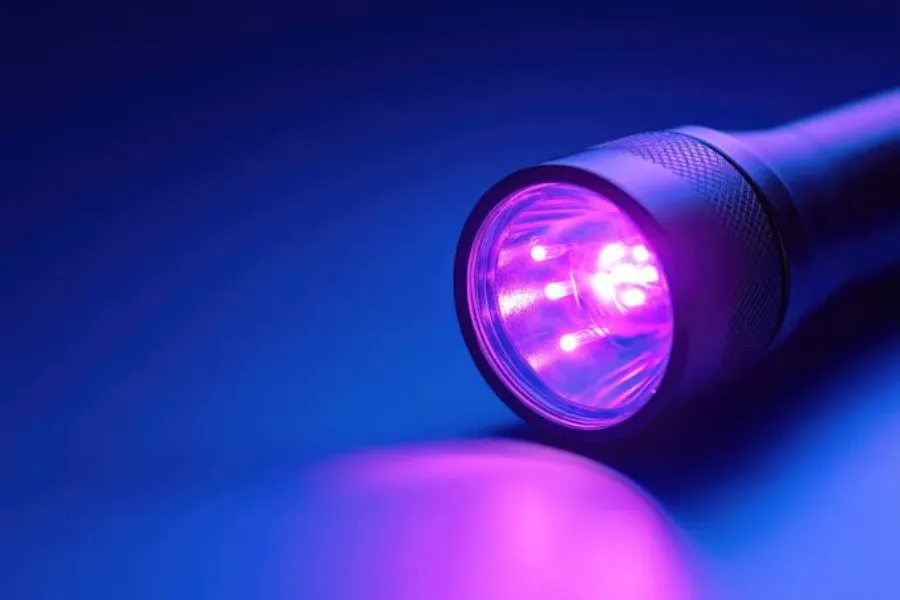
Will a UV Flashlight or Blacklight Kill Bed Bugs?
An ordinary UV flashlight is not a dependable bed bug extermination tool.
Many consumer blacklight flashlights emit UV-A light, often around 365–395 nanometers. UV-A differs from the shorter-wavelength UV-C radiation investigated in the Ohio State study.
A flashlight advertised for detecting stains, fluorescent materials, or pet urine should not be treated as equivalent to a laboratory UV-C exposure system.
Some UV flashlights may make certain residues easier to notice, but fluorescence alone cannot confirm the presence of bed bugs. Other substances can also fluoresce.
For an inspection, look for stronger physical evidence:
- Live insects around mattress seams or furniture.
- Dark fecal spots on bedding and nearby surfaces.
- Rust-colored or reddish stains.
- Shed skins, eggs, or eggshells.
The EPA notes that skin reactions alone are not a reliable way to identify bed bugs because bites can resemble other insect bites or skin conditions.
A regular flashlight, a careful visual inspection, and professional identification when needed are more sensible starting points than relying on a blacklight.
Can a UV Light Help You Find Bed Bugs?
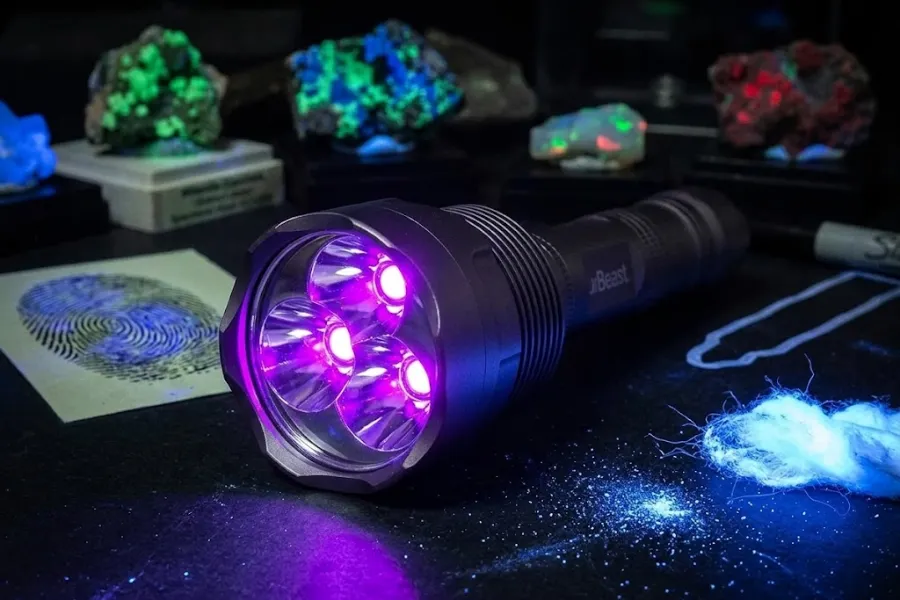
Sometimes. Bed bugs themselves don't glow, but research published in the Journal of Economic Entomology (2022) found that bed bugs leave "clear" fecal spots that show up only under ultraviolet light, and that these were more common than the familiar dark spots. A UV flashlight can therefore reveal evidence that's easy to miss in normal light.
Glowing marks aren't proof, though. Lint, detergents, urine and other residues also fluoresce. Confirm with physical evidence: live bugs, dark spotting along mattress seams, shed skins or eggs. EPA's guide to finding bed bugs shows where to look.
Can UV Light Kill Bed Bug Eggs?
Yes, directly exposed bed bug eggs can be highly vulnerable to UV-C under controlled conditions.
In the Ohio State study, reported egg mortality reached 100% in the five-second treatment group and 95% in the ten-second group.
However, the eggs were positioned very close to the lamp, and researchers monitored the results over two weeks.
Those figures should not be interpreted as a guarantee that a household UV device will kill 95–100% of eggs in a mattress.
Eggs can be located in narrow, protected spaces, and a light source must deliver sufficient UV-C to the actual egg.
Even a treatment that kills exposed eggs could leave an infestation active if nymphs or adults remain elsewhere.
For dependable control, treatment needs to address the entire affected environment rather than only visible eggs.
Can UV Light Kill Adult Bed Bugs?
The frequently cited Ohio State UV-C study did not test adult bed bug mortality.
Therefore, its egg and first-stage nymph results cannot be used to claim that the same exposure time will kill adult insects.
That does not prove adults are immune to UV-C. It means the specific research does not provide the evidence needed to recommend a reliable UV-C treatment for adults.
If you discover adult bed bugs inside furniture or bedding, do not assume that shining a household UV light on the visible insects has eliminated the hidden population.
A complete inspection and an appropriate treatment plan are still necessary.
Does UV Light Penetrate Mattresses, Sofas, or Furniture?
No. UV-C does not reliably penetrate the interior of a mattress, sofa cushion, or solid furniture component.
It mainly affects areas reached by sufficient radiation.
Imagine a bed bug inside the fold of a mattress seam. The surrounding fabric can shield the insect from direct UV-C exposure, even if a lamp is shining nearby.
The same problem occurs with bed bugs hiding:
- Beneath box springs.
- Inside upholstered furniture.
- Behind bed frames and headboards.
- In furniture joints.
- Along baseboards and wall cracks.
This is a critical limitation because the most difficult part of bed bug control is reaching insects you cannot see.
A UV lamp cannot replace methods designed to reach or address those hidden areas. When an item is heavily infested, removal may be safer than treatment — see our services for mattress removal, couch removal, and furniture removal in Chicago.
Is UV-C Light Safe to Use for Bed Bug Treatment?
Direct exposure to certain UV-C devices can be dangerous to your skin and eyes.
The U.S. Food and Drug Administration (FDA) has warned consumers about UV wands that emit unsafe levels of radiation. Some tested devices could cause skin injuries or painful eye injuries after only seconds of exposure.
UV-C is sometimes marketed as a chemical-free technology. But chemical-free does not automatically mean harmless.
Never assume that a powerful household UV lamp is safe because it is sold online or described as a sanitizer.
Be especially cautious about products that:
- Claim to eliminate insects in seconds without independent evidence.
- Lack clear safety instructions.
- Provide no credible information about their UV output.
- Encourage direct exposure of people or pets.
- Promise complete room-wide extermination without demonstrating how hidden insects are reached.
An EPA establishment number also does not mean that EPA has approved a UV device or verified its pest-killing claims.
For most homeowners dealing with bed bugs, attempting to reproduce a laboratory UV-C experiment is neither a practical nor a recommended do-it-yourself treatment.
Do Halo UV and Other UV Bed Bug Lamps Work?
There's an interesting link here: the Ohio State researchers used the 35-watt UV-C bulb from an Oreck Halo vacuum. Even so, the bulb sat only 4 cm from eggs and nymphs that were fully exposed. That's very different from passing a vacuum or lamp over a mattress where bugs are tucked into seams.
Products such as HaloUV and HaloClean-style UV-C lamps are marketed for sanitizing rooms and bedding. We could not find independent, peer-reviewed tests showing that any of them eliminates a household bed bug infestation. Before you buy, keep in mind:
- UV devices fall under EPA's "pesticide device" rules. EPA says an establishment number on the box does not mean EPA reviewed the product's safety or effectiveness.
- Lamps that also make ozone need everyone, including pets, out of the room.
- Light doesn't pass through fabric, wood or cushions, so the bugs you most need to reach get the least exposure.
Comparing specific lights? See our best UV lights for bed bugs guide. Read EPA's guide to pesticide devices.
What Our Chicago Customers Say
Junk Robbers has 450+ Google reviews from customers across Chicago. See what they say:


UV Light vs. Heat, Steam, and Professional Bed Bug Treatment
If your goal is to eliminate an infestation rather than kill individual exposed insects, established bed bug control methods are generally more practical.
| Treatment Method | What It Can Do | Main Limitation |
|---|---|---|
| UV-C light | Harm or kill directly exposed eggs and young nymphs in laboratory conditions | Hidden bugs may receive little or no exposure; safety concerns |
| Clothes dryer | Kill bed bugs in suitable clothing and bedding using high heat | Only treats dryer-safe items |
| Professional heat treatment | Heat suitable areas or items to lethal temperatures | Needs proper equipment and temperature monitoring |
| Steam treatment | Treat suitable seams, cracks, fabrics, and furniture surfaces | Requires proper temperature, technique, and coverage |
| EPA-registered bed bug pesticides | Help control bed bugs when correctly selected and applied | Must follow product labels; typically part of a broader strategy |
| Integrated pest management | Combines inspection, treatment, prevention, and monitoring | Requires coordination and follow-up |
Heat Treatment
Heat is an established non-chemical method of controlling bed bugs.
The EPA recommends using a clothes dryer on high heat for 30 minutes for suitable bedding and clothing.
Its integrated pest management guidance also describes heating infested articles or areas to at least 120°F (approximately 49°C) for 90 minutes to ensure eggs are killed under those treatment conditions.
Professional heat treatments require appropriate equipment and procedures so lethal temperatures reach the areas where insects are hiding.
Do not attempt to heat a bedroom with a space heater, fireplace, or household thermostat. These methods may be ineffective and dangerous.
Steam Treatment
Steam can help treat certain furniture surfaces, carpet edges, baseboards, and other accessible hiding locations.
The EPA advises using steam at a temperature of at least 130°F and avoiding excessively forceful airflow that could scatter bed bugs.
The correct equipment, material compatibility, surface temperature, and treatment technique all matter.
Integrated Pest Management
A comprehensive bed bug treatment plan may include inspection, vacuuming, laundering, mattress encasements, interceptors, professionally applied treatment, and follow-up monitoring.
Some infestations require more than one treatment.
The purpose is not merely to kill the insects that are visible today. It is to address remaining bed bugs, eggs, hiding places, and the risk of continued activity.
Explore EPA guidance on integrated pest management for bed bugs.
Can Sunlight Kill Bed Bugs Naturally?
Leaving an infested mattress or piece of furniture in the sun is not a dependable substitute for controlled treatment.
Natural sunlight reaching Earth's surface does not contain the same UV-C radiation produced by specialized lamps. Atmospheric protection absorbs solar UV-C before it reaches the ground.
Sunlight can warm objects, and sufficient heat can kill bed bugs, but the sun is far too inconsistent to rely on: clouds, shade, the season, and the material of the item all affect how hot it actually gets. You cannot guarantee that lethal temperatures reach every hidden insect and egg.
For that reason, sun exposure should not be treated as a stand-alone bed bug solution. When an infested item cannot be reliably treated, professional removal and disposal of the affected furniture is often the safer and more practical option.
When Bed Bug Furniture Should Be Removed
UV light, sunlight, and DIY devices may reduce visible activity, but they rarely eliminate a hidden, reproducing population on their own. If a mattress, sofa, or piece of upholstered furniture is heavily infested or cannot be treated effectively, having it removed can help stop the spread to the rest of your home.
Junk Robbers provides discreet bed bug junk removal for homes, rentals, and property managers. We haul away infested mattresses, box springs, sofas, couches, and furniture, so you can move forward with a clean slate. Explore our full list of services or see bed bug junk removal in other cities.
Ready to Get Rid of Infested Furniture?
Discreet, hassle-free removal across Chicago and surrounding suburbs. Get a free, no-obligation quote today.
UV Light and Bed Bugs: FAQs
Does UV light kill bed bugs?
Not reliably. UV-C can kill bed bug eggs and young nymphs that it hits directly at close range, but it can't reach bugs hidden in seams, cracks or cushions. Most UV flashlights are UV-A, which doesn't kill bed bugs.
How long does UV light take to kill bed bugs?
No safe household time has been established. In the 2013 Ohio State lab study, 5–10 seconds of UV-C at 4 cm killed 95–100% of exposed eggs, but only 24–62% of first-stage nymphs. Adults weren't tested.
Will a blacklight flashlight kill bed bugs?
No. Blacklight flashlights emit UV-A, usually 365–395 nm, which is used for inspection, not extermination. They can help you spot fecal stains, but they won't kill bugs or eggs.
Do bed bugs glow under UV light?
The bugs don't, but some of their fecal spots do. A 2022 study found that bed bugs leave clear spots that are visible only under UV light. Other residues also glow, so confirm with live bugs, shed skins or dark spotting.
What actually kills bed bugs?
Heat and an integrated plan. EPA recommends drying bedding and clothes on high heat for 30 minutes, steam at 130°F or hotter for surfaces, and professional treatment for an active infestation.
Should I throw out a mattress or couch with bed bugs?
Not always, because many items can be treated. Removal makes sense when a piece is heavily infested, damaged or can't be treated. Junk Robbers removes infested furniture across Chicago and the suburbs. Get a free quote.
Don't Let UV Light Be Your Only Plan
UV-C may kill exposed bed bugs and eggs in a lab, but it cannot clear a hidden infestation in your home. For infested furniture that cannot be treated, Junk Robbers hauls it away, affordably and stress-free.